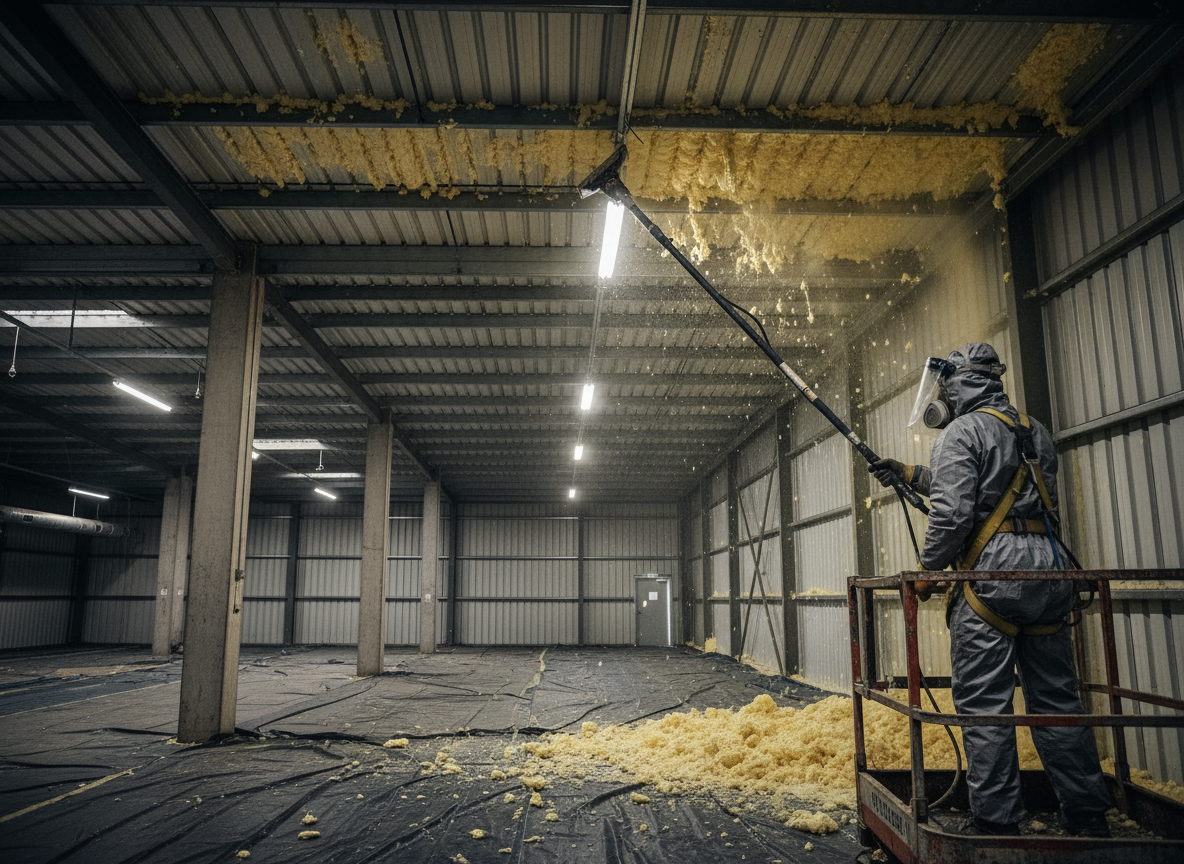
Warehouses in Yeovil often feature older metal-clad or brick structures with spray foam applied directly to roofs and walls during the 1990s and 2000s energy upgrades. Removing this material requires careful sectioning to avoid damaging purlins or releasing fibres into large open volumes where air movement is hard to control. In the Yeovil area, damp winters mean foam frequently conceals corrosion on steelwork, so inspection must include moisture mapping before any cutting begins.
Dust and debris containment becomes critical when working inside active or semi-active units near Princes Street or the industrial estates off Lysander Road. Negative air machines and sealed poly barriers prevent migration into adjacent offices or storage bays, while waste is double-bagged for licensed disposal at facilities serving South Somerset. Access via cherry pickers is common because many Yeovil warehouses lack internal mezzanines or clear floor space for scaffolding.
Edge cases include foam bonded to asbestos-containing roof sheets, which requires licensed contractors to work alongside our team, and foam installed over electrical trunking where live cables must be isolated first. We always verify ventilation paths in these large spaces because trapped solvents from removal chemicals can build up quickly in buildings with limited ridge vents typical of the local stock.
Seasonal Considerations
Winter removal in Yeovil warehouses demands heated enclosures to keep adhesives workable when temperatures drop below 5°C, while summer jobs require extra dust suppression because dry air carries particles further across open floors.
Technician insight
In Yeovil, the thing that catches most people out with Warehouse spray Foam removal is how the damp microclimate around the River Yeo lets moisture sit under the foam on metal roofs for years, so what looks like straightforward stripping often turns into unexpected steelwork repairs once the insulation comes off.
Disused Warehouse Off Lysander Road
Owner of a storage unit in Yeovil needed the foam stripped before new tenants could install racking. We found extensive surface rust on the purlins hidden beneath the foam and areas where foam had bonded to older electrical trunking. After isolating power and installing full negative air, we removed the material in sections and treated the steel before handover. The unit passed clearance testing the same week.
How it works
- 1
Initial Site Survey
Measure warehouse dimensions, assess foam depth and substrate condition, identify electrical and structural hazards in the Yeovil unit.
- 2
Containment Setup
Install negative pressure zones, floor protection and sealed access points to keep debris inside the work area.
- 3
Foam Extraction
Section and remove foam using hand and mechanical tools, monitoring for hidden corrosion or cabling on metal and brick surfaces.
- 4
Waste Removal and Disposal
Double-bag all material and transport to licensed Somerset disposal sites with full chain-of-custody records.
- 5
Final Clearance
HEPA vacuum surfaces, conduct air quality checks and return the warehouse to usable condition.
Pricing
Pricing depends on warehouse floor area, foam thickness, roof height and access restrictions; quotes issued after on-site inspection.