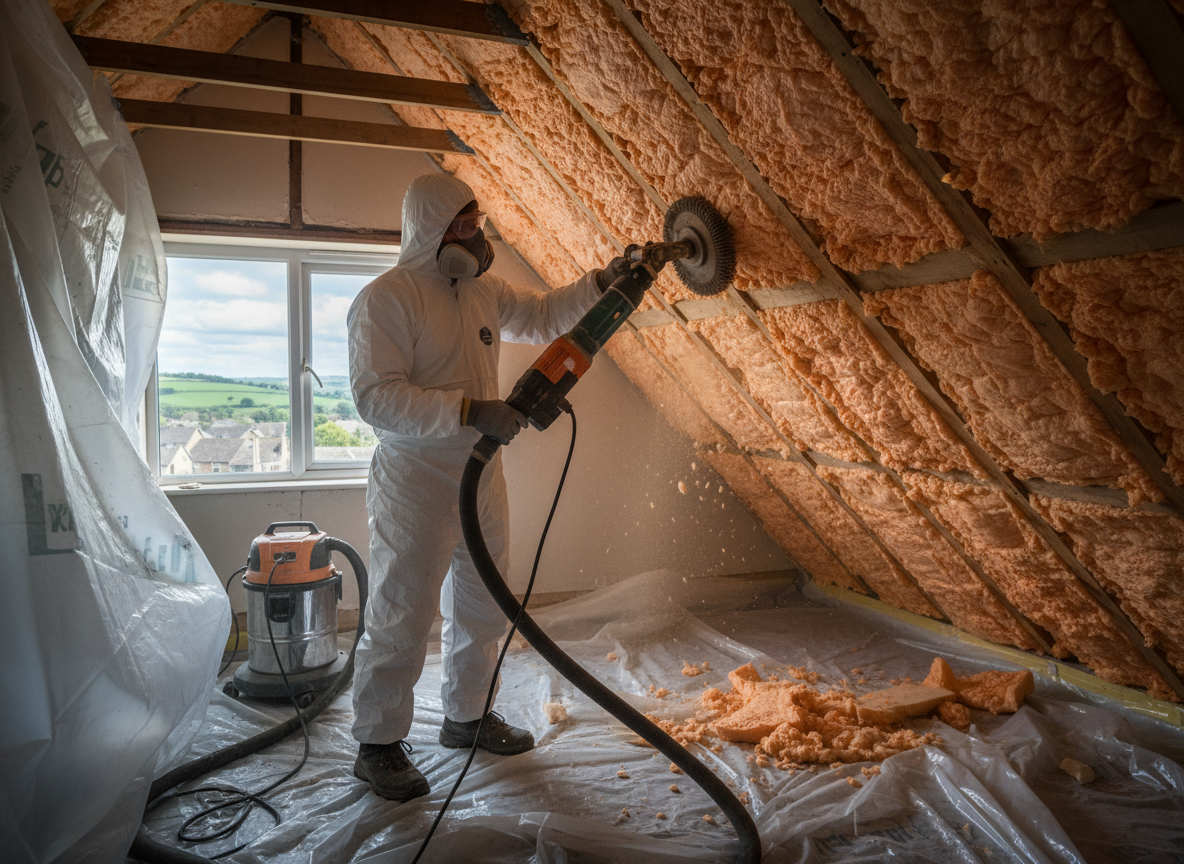
Yeovil's mix of Victorian terraces and post-war semis often received spray foam insulation in lofts and under floors during the 2000s energy grants. Removing it requires careful separation from original lath and plaster or concrete substrates without damaging the structure. Wet winters in Somerset mean foam frequently holds moisture against timbers, creating hidden decay that only becomes visible during extraction.
Work in Yeovil frequently involves properties near the town centre where narrow access and shared walls complicate containment. Technicians must isolate dust and debris to protect neighbouring homes while using negative pressure setups suited to the area's typical two-storey layouts. Older stone buildings around the BA20 postcode demand slower, section-by-section removal to avoid cracking fragile masonry.
Regulatory checks for asbestos in pre-1980s Yeovil homes add an extra layer before foam work begins. Disposal routes follow Somerset County guidelines, with waste taken to approved facilities rather than general landfill. Homeowners in surrounding villages like Brympton or Mudford face similar challenges from clay-heavy soils that keep crawl spaces damp year-round.
Seasonal Considerations
Winter jobs in Yeovil require heated enclosures to keep adhesives workable when temperatures drop below 5°C. Summer removals benefit from better ventilation but must account for increased pollen and dust in rural Somerset settings.
Technician insight
In Yeovil, the thing that catches most people out with Spray Foam Removal near me is how rain soaks into the stone walls of terraces off Princes Street and stays trapped behind the foam, turning a straightforward removal into a timber repair job once we open it up.
Loft Foam Removal in a Yeovil Terrace
Homeowner in a Victorian terrace near the town centre noticed musty smells after heavy winter rain. Inspection revealed saturated foam against joists with early rot. We extracted the foam in sections, treated the timber, and improved airflow before refitting the loft boards.
How it works
- 1
Initial Assessment
Inspect the property in Yeovil to identify foam type, depth, and any moisture damage in lofts or floors.
- 2
Containment Setup
Install dust barriers and extraction equipment suited to terraced homes common around Princes Street.
- 3
Foam Extraction
Remove insulation in controlled sections, checking for rot in timber joists typical of local Victorian stock.
- 4
Cleanup and Disposal
Clear debris and transport waste to approved Somerset facilities while restoring access points.
- 5
Final Inspection
Check for remaining material and advise on ventilation improvements for the damp Somerset climate.
Pricing
Cost depends on property size, foam thickness and access difficulty in Yeovil homes; upfront quotes provided after inspection.