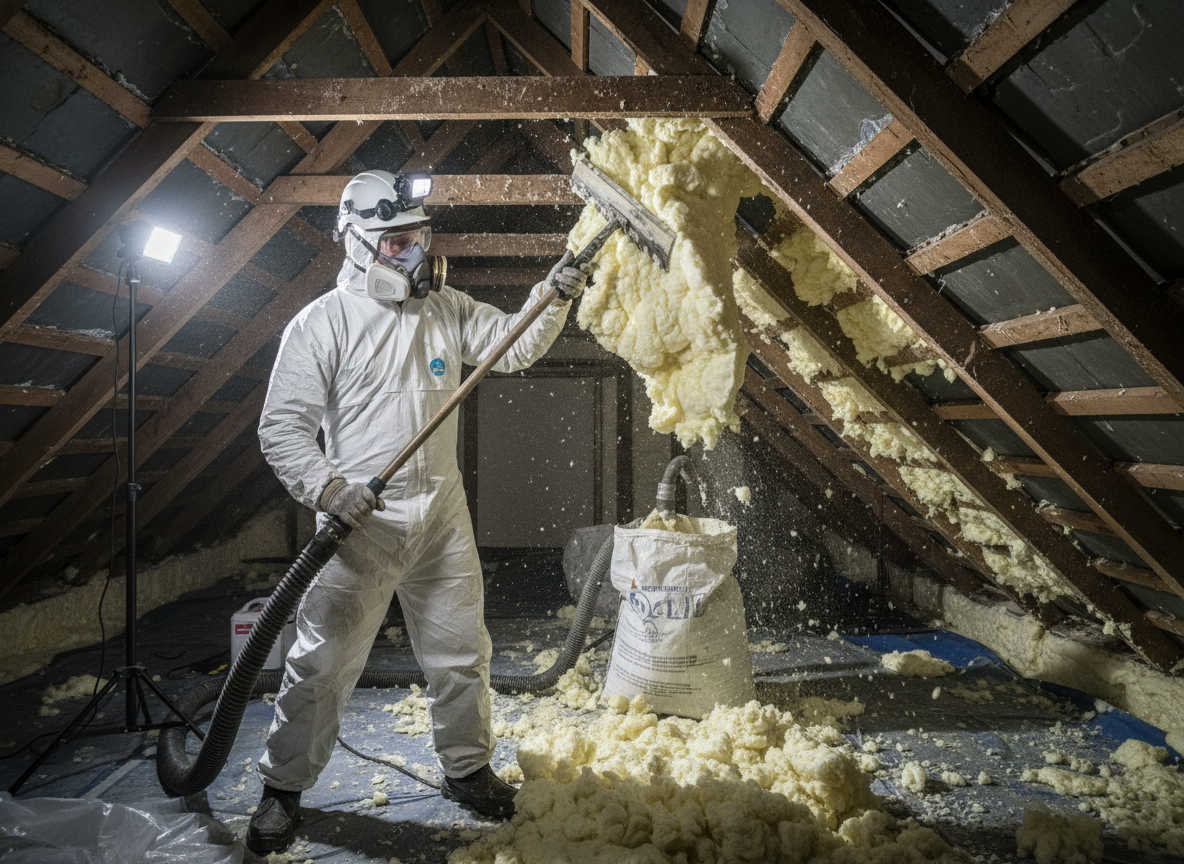
Open cell spray foam was popular in Yeovil lofts during the 2000s energy grants, but it often fails in the area's older stone and brick terraces where walls need to breathe. Once installed directly against rafters or solid masonry, the foam absorbs moisture from Somerset's frequent rain and holds it against timber, leading to rot that only shows after several winters. Removal requires cutting back to the original substrate without damaging lath or plaster ceilings common in pre-1930 properties near the town centre.
Homeowners in Yeovil often discover the issue when insulation sags or black mould appears on ceilings in winter. The open cell material breaks down into sticky residue that clings to joists, so crews work in sections, using negative air machines to control dust in confined roof voids. Care is needed around electrical cables and old chimney breasts that run through many Yeovil semis, as the foam can hide cracked flue joints.
After extraction, the roof void must be left clean enough for inspection by building control if the work affects thermal performance. In Yeovil's denser terraces, access is usually through a single loft hatch, so debris is bagged on site and lowered via external chute to avoid staining narrow staircases. Leaving any residue risks future damp patches once new insulation is fitted.
Technician insight
In Yeovil, the thing that catches most people out with open cell spray foam removal is how the foam was sprayed straight onto the back of stone walls in Victorian terraces; once winter rain soaks the masonry the trapped moisture has nowhere to go and starts rotting the ends of the ceiling joists before anyone notices.
Loft Extraction in a Central Yeovil Terrace
Owner of a 1920s terrace near Princes Street reported persistent damp patches on bedroom ceilings. Inspection showed open cell foam had been applied over the original mineral wool and against the stone gable. Crew removed the foam layer by layer, cleared residue from the rafters, and opened vents on both sides of the roof. The void dried out and the ceiling stains stopped spreading.
How it works
- 1
Site Assessment
Inspect loft or wall cavities in the Yeovil property to map foam depth, check for hidden timber damage, and confirm access routes through typical terrace layouts.
- 2
Containment Setup
Seal the work area with sheeting and negative pressure units to keep residue from drifting into living spaces below, especially important in two-storey semis common around Princes Street.
- 3
Foam Extraction
Cut and remove open cell foam in controlled sections, scraping residue from rafters and masonry while protecting original lath and plaster finishes.
- 4
Clearance and Ventilation
Bag all debris on site, vacuum remaining dust, and open vents to dry the void before handover.
Pricing
Cost depends on foam thickness, access difficulty in older Yeovil properties, and whether additional timber treatment is required. Upfront quotes provided after inspection.