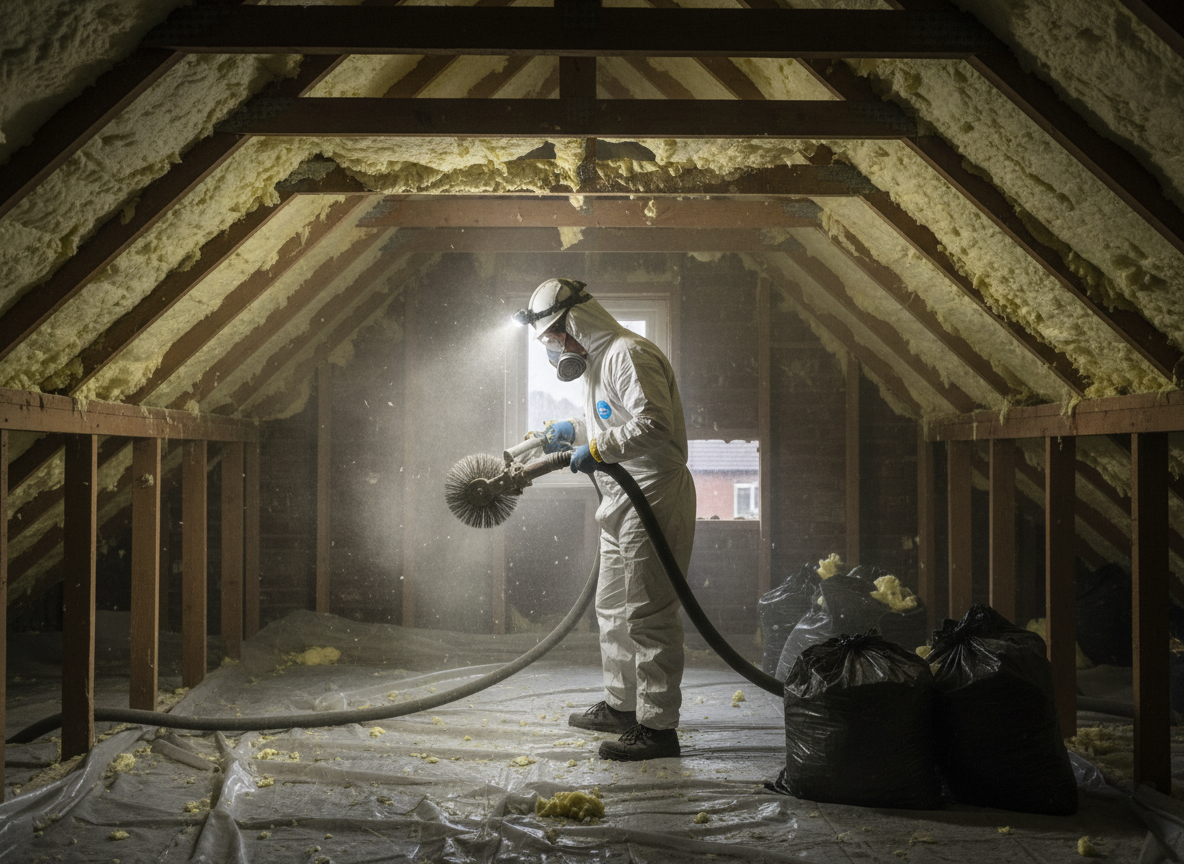
Attic spray foam in Yeovil properties often sits over original lath and plaster ceilings or early 20th-century timber joists that were never designed for sealed insulation. Closed-cell foam bonds tightly to these surfaces and can trap moisture from the county's frequent rainfall and mild winters, creating hidden condensation pockets along the roofline. Removal requires careful scoring and mechanical separation to avoid tearing through fragile ceilings below, especially in Victorian terraces around the town centre where headroom is limited and access hatches are small.
Edge cases appear regularly in post-war semis on the outskirts where foam was sprayed over electrical cabling and loft tanks without proper separation. The foam must be peeled back in sections while monitoring for live wires and pipework that run close to the roof pitch. Once removed, the attic needs ventilation checks because the original eaves gaps in many Yeovil homes have been blocked over decades, and restoring airflow prevents future damp issues on the rafters.
Regulation notes include checking that any remaining insulation meets current building standards after foam extraction, particularly where the work affects the thermal envelope of the property. Homeowners should expect debris bagging and off-site disposal because cured foam cannot be left in domestic waste streams. Work is scheduled around weather windows since sudden Somerset showers can drive water through any temporary roof openings created during removal.
Technician insight
In Yeovil, the thing that catches most people out with Attic spray foam removal is how the damp Somerset air gets trapped under the foam against unventilated rafters in 1930s semis around the hospital area, so you often find rot starting on the back of the plasterboard before the homeowner notices any smell.
Foam Removal in Yeovil Semi
Owner of a 1950s semi near the railway station reported musty loft smells after heavy winter rain. Inspection showed closed-cell foam sealing over blocked eaves vents and trapping moisture on the rafters. We removed the foam in sections, cleared the original vents and added extra airflow, leaving the attic dry with no further condensation.
How it works
- 1
Initial Assessment
Inspect the attic from inside and via external roof checks to map foam thickness, access points and any hidden services in Yeovil properties.
- 2
Containment Setup
Protect living spaces below with sheeting and negative air pressure to contain dust during mechanical removal.
- 3
Foam Extraction
Score and peel foam in controlled sections, separating it from joists and ceilings without damaging original timber or plaster.
- 4
Clearance and Ventilation
Bag and remove all debris, then assess and improve eaves ventilation to suit the damp local climate.
- 5
Final Inspection
Walk the space with the homeowner to confirm clean surfaces and restored access before leaving site.
Pricing
Pricing varies by attic size, foam depth and access constraints typical of Yeovil's older roofs; call 24/7 for a site visit.