2026-10-22 ·
How Listed Buildings in Yeovil Handle Spray Foam Removal
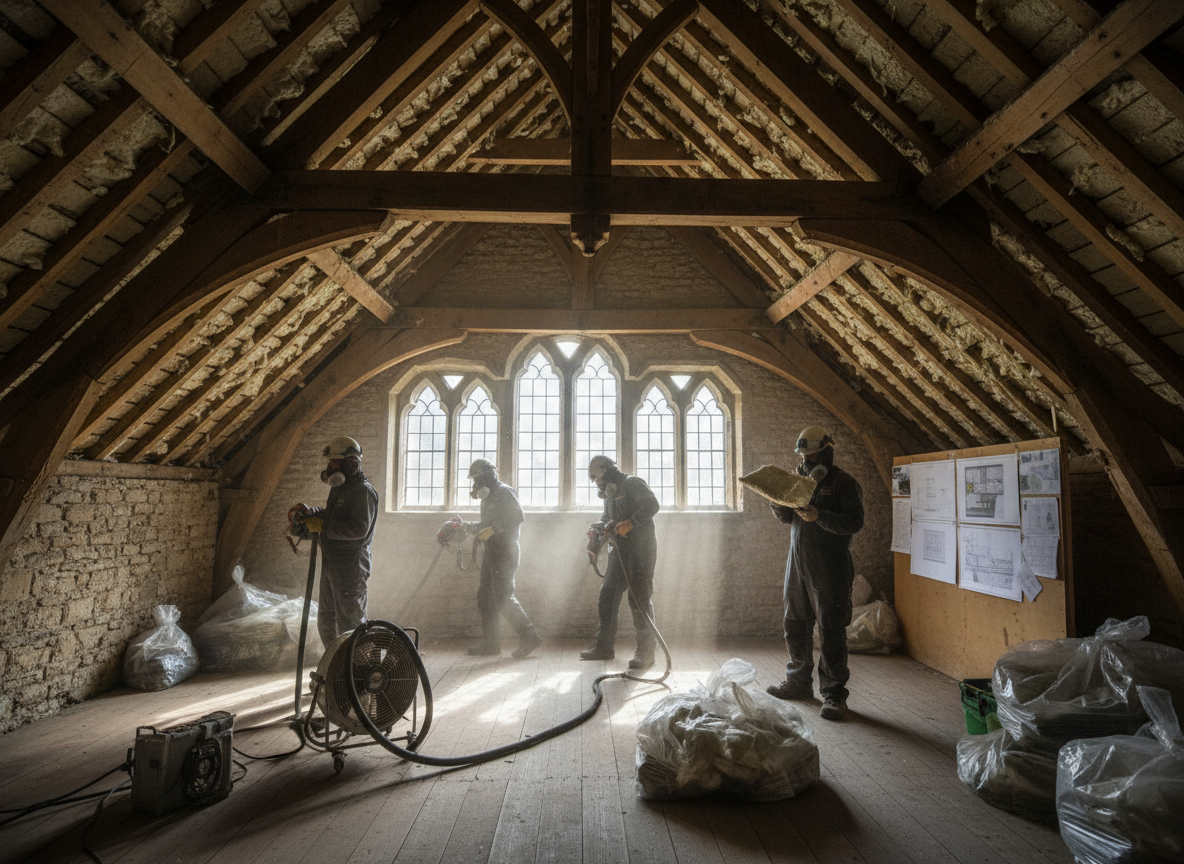
Listed buildings in Yeovil require listed building consent before spray foam removal can start, and approvals alone usually add 4–8 weeks to the timeline. Owners must work with conservation officers to select techniques that avoid damage to historic timber, stone or plaster. The business operates 24/7 from Ceres Natural Foods Ltd, 9-11 Princes St, Yeovil BA20 1EN, UK, giving local owners direct access to crews familiar with these constraints.
Obtaining Listed Building Consent in Yeovil
Homeowners in Yeovil must submit detailed method statements and material specifications to South Somerset District Council before work begins. Applications normally include photographs of the existing foam, proposed removal approach and reinstatement plans. Crews often start with an insulation assessment to document the condition of lath and plaster or exposed beams. Refusal rates rise when proposals mention aggressive scraping or solvent use, so most successful applications specify dry ice blasting or hand removal. Neighbouring properties in the town centre and along Princes Street share similar Georgian and Victorian stock, so officers compare applications against recent approvals in the same streets. Once consent is granted, work must follow the exact specification or risk enforcement action.
Removal Techniques Suitable for Historic Fabric
Dry ice blasting is the method most frequently approved for listed buildings around Yeovil because it removes foam without abrading timber or masonry. Operators adjust pellet size and pressure on site after test patches, typically completing a standard loft in two to three days. Dry ice blasting spray foam removal produces no secondary waste water, which matters in properties with lime plaster ceilings that could be damaged by moisture. Where foam fills rafter voids, crews combine blasting with gentle mechanical scraping using plastic tools. Loft spray foam removal teams keep dust extraction running continuously to protect original floorboards below. After the foam is gone, surfaces are left ready for breathable insulation or simple ventilation upgrades rather than new impermeable layers.
Local Housing Stock and Weather Influences
Many listed buildings in Yeovil date from the 18th and 19th centuries and feature solid stone walls or timber frames with lime-based finishes. These constructions move with seasonal temperature swings, so removal crews avoid winter work when cold can make plaster brittle. Summer humidity in the Yeovil area can slow drying after any cleaning step, extending the project by several days. Properties near the town centre often have restricted access through narrow lanes, requiring smaller equipment and more manual handling. Crews familiar with these conditions schedule longer lead times for jobs in areas such as the historic core compared with newer estates on the outskirts. The same weather patterns affect drying times for any repairs that follow removal.
Aftercare and Further Reading
Once foam is cleared, owners should allow several weeks for the building to stabilise before installing replacement insulation. Monitoring for damp patches during the first winter helps confirm that original ventilation paths remain effective. Readers can review Factors That Influence Spray Foam Removal Costs Around Yeovil for typical price ranges on listed projects and Step-by-Step Checks Before Booking Spray Foam Removal in Yeovil for a checklist that includes consent requirements.